
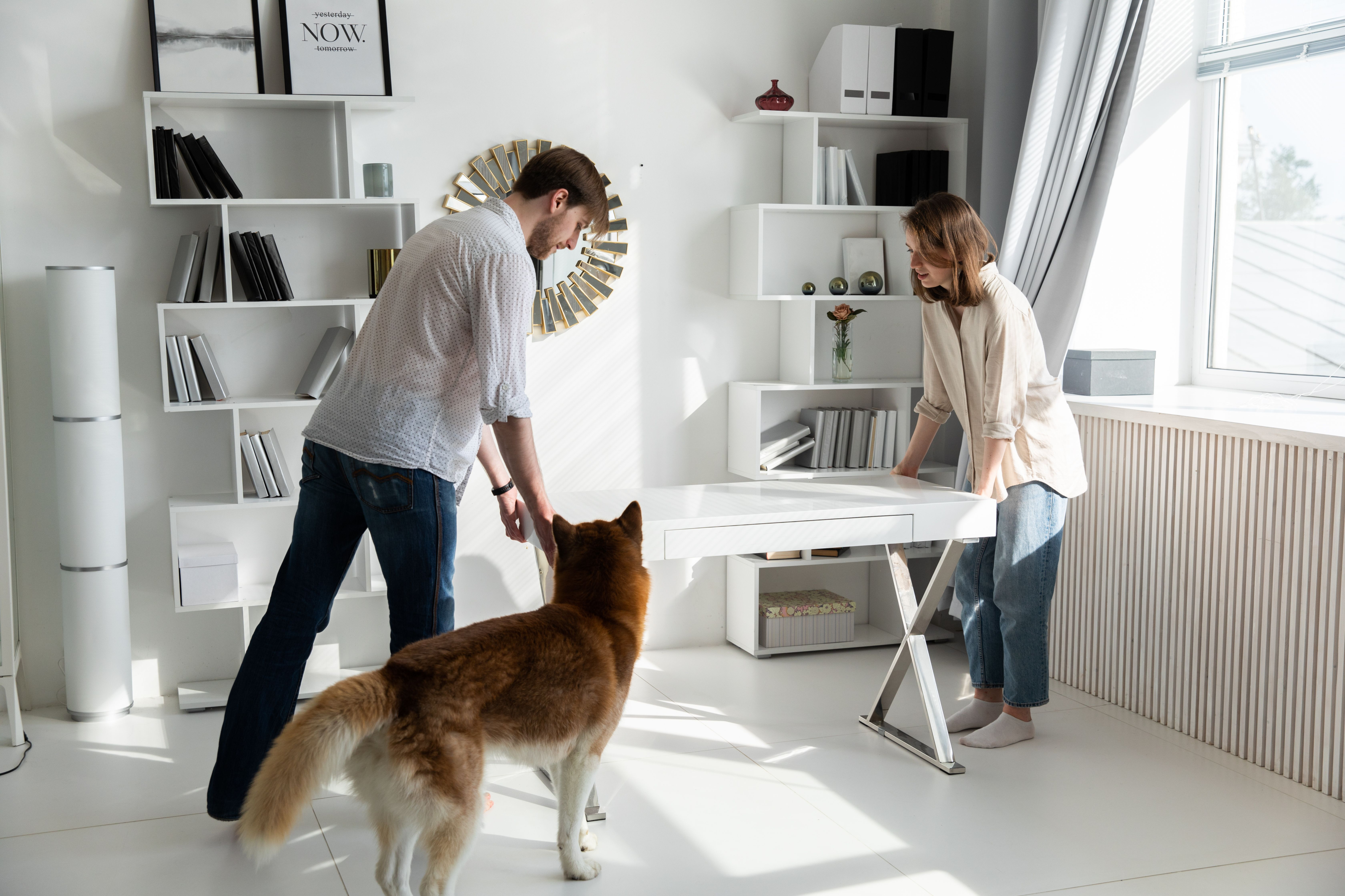
Quick Answer: Can you have a dog in a studio apartment? Yes, as long as your lease allows dogs and you choose one whose energy suits a single room. Calm adult dogs and toy breeds adapt well. High-drive breeds and young puppies need far more outdoor time, and many leases restrict certain breeds or weights.
A 460-square-foot studio sounds tight for two, especially when one of you has four legs. That's RentCafe's 2025 national average for a studio, and plenty of dogs live happily in less. Juniper Flats Apartments, serving renters in Albuquerque's Uptown area, put this guide together as a companion to our look at which apartment amenities matter most in the city vs. the suburbs, because a dog rewrites that list fast.
What Is It Really Like Living in an Apartment With a Dog?
Living in an apartment with a dog is mostly a scheduling job. Your dog won't measure the square footage. It will notice skipped walks and long, empty afternoons. In a studio, every bark, accident or chewed shoe happens in the one room where you also sleep and work, so small habits matter more than they would in a larger place.
Having a dog in an apartment comes down to routine more than floor space. The CDC's guidance for dog owners tells people to match a dog's temperament and activity level to their home and the time they actually have. Around 38% of U.S. households have at least one dog, per that June 2026 CDC page. You won't be the only one on your floor.
Space Matters Less Than Energy
A retired racing greyhound that naps most of the day can be easier in a studio than a 15-pound terrier that patrols the window. Size still counts for practical things like crate footprint and room to turn around in a galley kitchen.
Noise is the bigger issue. Every dog in apartment buildings shares walls, hallways and sometimes an elevator with neighbors who didn't choose it. A dog that barks at footsteps will hear a lot of footsteps.
Why a Puppy in Apartment Studios Is the Hard Mode
Trainers commonly use a rule of thumb that a puppy can hold its bladder about one hour per month of age. A three-month-old needs a trip outside roughly every three hours, overnight included. On a fourth floor, that trip takes a few minutes each way before the puppy even reaches grass.
Chewing and teething come next. In a studio there's no spare room to close off, so a crate or an exercise pen becomes the puppy's safe zone. If that sounds like a lot, it is. An adult rescue with a known history skips most of it.
What Are the Best Dog Breeds for Apartments?
The best dog breeds for apartments are ones with low to moderate energy, a quiet bark and an adult size under your lease's weight limit. Breed is a starting point, though, not a guarantee. A specific dog's age and history tell you more, which is why adult rescues with known temperaments are often the safest pick for a studio.
| Dog Type | Examples | Studio Fit | What to Plan For |
|---|---|---|---|
| Toy companion | Cavalier King Charles Spaniel, Shih Tzu | Strong | Daily walks still needed; some bark at hallway noise |
| Calm sighthound | Greyhound, Whippet | Good indoors | Needs a fenced space to sprint; greyhounds appear on some restricted lists |
| Small terrier | Jack Russell, Rat Terrier | Mixed | High energy and alert barking |
| Working or sled breed | Border Collie, Husky | Poor | Hours of daily exercise; huskies are often restricted |
| Adult rescue, small or calm breed | Varies | Best overall | Ask the shelter about barking and time alone |
Restricted Dog Breeds for Apartments and Other Lease Rules
Restricted dog breeds for apartments usually include pit bull types, Rottweilers, Doberman Pinschers, German Shepherds, Akitas, Chow Chows and wolf hybrids. Lists vary by property and often follow the owner's insurance carrier. Many communities also cap weight, commonly somewhere between 20 and 50 pounds, and limit each household to two pets.
Read the actual list before you fall for a dog. Some published policies go further than the usual suspects and also name Dalmatians and Greyhounds, plus mixes of any listed breed. That's the honest catch with breed guides: a dog can be a perfect apartment match and still be banned by your lease. The CDC also advises checking local laws on certain breeds before you adopt, since some cities set their own rules.
Service animals sit outside these pet rules. Under the ADA's service animal requirements, a service animal is a dog individually trained to do work or perform tasks for a person with a disability, and dogs whose only role is emotional support don't qualify. Housing rules for emotional support animals have shifted too. HUD withdrew its 2013 and 2020 assistance animal guidance effective September 17, 2025, and in May 2026 it narrowed federal enforcement to individually trained animals. State laws can still be broader, so check yours.
Can You Foster Dogs in an Apartment?
Yes, if your lease allows dogs and the foster meets the same breed and weight rules. A foster is still a dog living in your unit, so the pet clause applies. Get written approval from your leasing office first. Then tell the rescue about your square footage and stairs so they can match you with a calm adult rather than an adolescent herding dog.
Frequently Asked Questions
1. Is a Studio Apartment Too Small for a Dog?
Not for most dogs. Calm adults, toy breeds and many seniors settle into a studio easily when they get daily walks and some mental work, such as puzzle feeders or sniff games. High-drive working breeds struggle in apartments of any size, because their needs are about exercise and stimulation rather than square feet.
2. How Long Can a Puppy Be Left Alone in an Apartment?
Plan on roughly one hour per month of age, the rule of thumb most trainers use, so a two-month-old shouldn't go much past two hours. Holding it longer risks accidents and discomfort. If you work away from home, book a midday walker or puppy daycare until your dog is around six months old.
3. Do Dogs and Apartments Mix if You Work Full Time?
They can, with a plan. An adult dog that's already house-trained handles an eight-hour day far better than a puppy. A walk before work, a midday visit from a walker and a long evening outing cover most dogs. Food puzzles and a quiet radio help the hours in between feel shorter.
4. What Should You Have Ready Before Bringing a Dog Home?
Sort out the paperwork and the basics before day one:
- Written pet approval and any signed pet addendum
- A crate or bed sized for the dog's adult weight
- A vet visit booked within the first week, as the CDC recommends
- Waste bags and an enzyme cleaner for indoor accidents
5. Will a Dog Raise My Rent?
Often, yes. Many properties charge monthly pet rent, a one-time fee or a refundable deposit, and the amounts vary by community and state. Ask for the full pet policy in writing before you sign. If you're adding a dog mid-lease, check your next lease renewal notice for updated charges.
Conclusion: Pick the Dog That Fits the Room
A studio works for a dog when the routine works. Pick a calm adult or a low-energy breed, confirm the breed and weight rules before you apply, and build walks into your day like any other appointment. First lease? Our first-time renter's guide covers what to check in the fine print. If you're touring studios in Albuquerque, ask the Juniper Flats leasing team for the current pet policy. So, can you have a dog in a studio apartment? With the right dog and a plan, absolutely.