
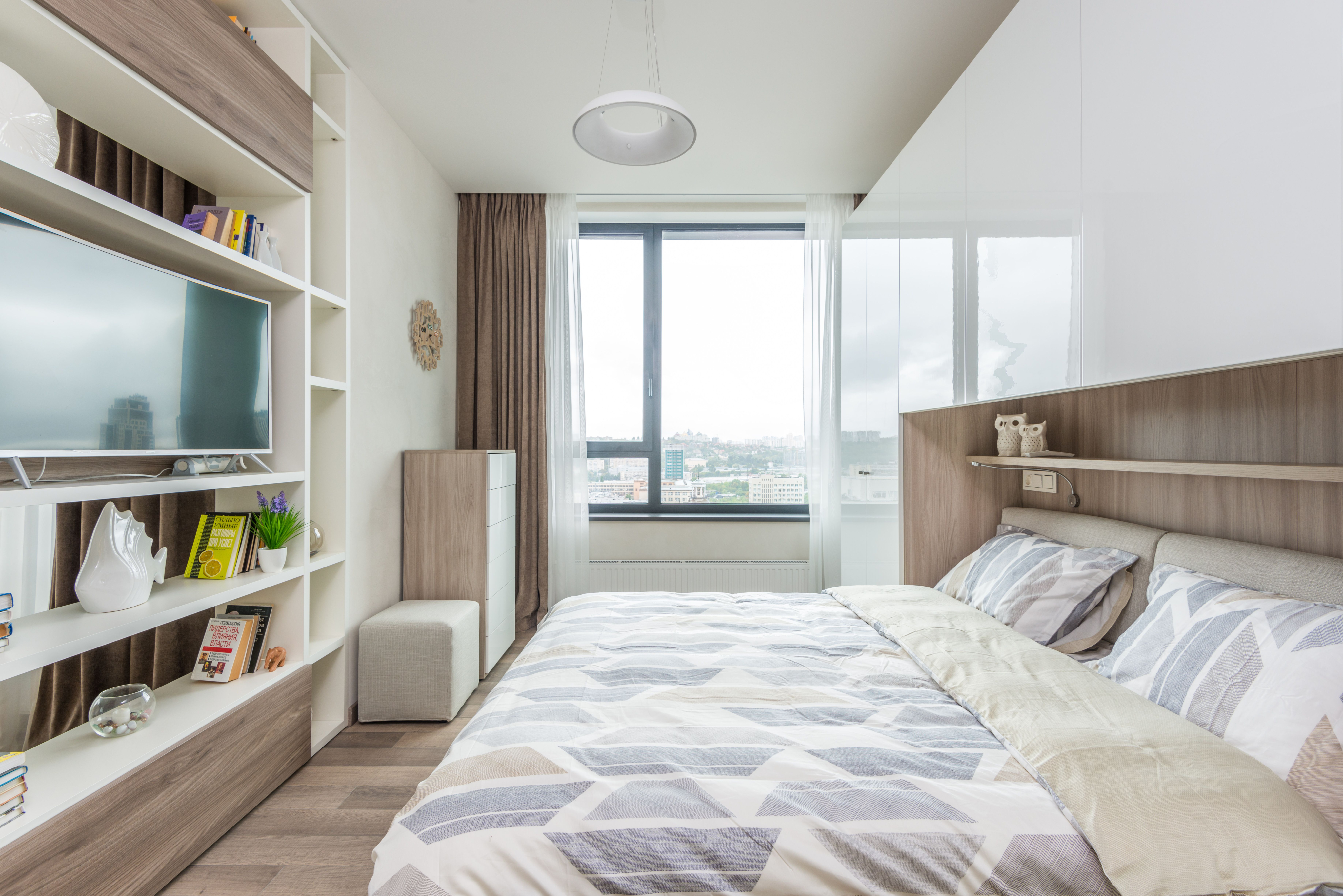
Quick Answer: The studio apartment mistakes first-time renters make most often are guessing at the size, budgeting on advertised rent alone, skipping renters insurance, and signing a lease they haven't read. Each one is avoidable. Measure the room and ask for the total monthly cost in writing before you pay an application fee.
A studio puts your bed and your kitchen in the same room, so small errors show up fast. A sofa that's eight inches too long blocks the closet. A $40 monthly fee you didn't ask about eats the savings that made a studio attractive. If this is your first lease, start with our first-time renter's guide to off-campus housing, then work through the list below.
What Is Living in a Studio Apartment Really Like?
Living in a studio apartment means one open room handles sleeping, cooking, working and relaxing, with only the bathroom behind a door. It usually costs less than a one-bedroom and takes minutes to clean. The tradeoff is that everything you own is always in view, so layout and storage matter more than the square footage on the listing.
Guessing at Studio Apartment Size
RentCafe's analysis of Yardi data, published in 2026, puts the average U.S. studio at 460 square feet. One-bedrooms average 735. Studios in the most expensive cities often run 300 to 400.
The listed total also includes the bathroom and kitchen. Your open floor is smaller. Bring a tape measure to the tour and write down the longest uninterrupted wall, because that wall decides where the bed goes.
Judging the Room by Photos
Wide-angle listing photos stretch a room. Tour in person when you can, and check what photos hide: outlet locations, closet depth and how much hallway noise comes through the door. Our guide to which apartment amenities matter most can help you decide what's worth paying for outside the unit.
Touring also protects you from fake listings. The Federal Trade Commission's advice on rental listing scams says a landlord doesn't need your Social Security number before you've agreed to rent. Rent far below the area's going rate and pressure to decide fast are both warning signs.
Which Renting Mistakes Cost Studio Renters the Most?
The expensive renting mistakes happen before move-in: budgeting on advertised rent, paying application fees too early, going without insurance, and skimming the lease.
Missing Hidden Apartment Fees
Advertised rent is often a base number. In a March 2026 notice, the FTC described mandatory rental fees that surface after you apply, and cited a 2025 report in which more than 70% of renters said they paid at least one required charge on top of rent. The notice lists trash, pest control, technology and payment processing fees among them. It was a request for comment, not a final rule, so disclosure still varies by state and by property.
Application fees add up too. The same notice cites a median application fee of $50, with the typical renter applying twice. Before you apply anywhere, ask what you'll pay in total each month and what is due at move-in. Get the answer in writing.
Skipping Renters Insurance
Your landlord's policy covers the building. It doesn't cover your laptop or your clothes after a fire or a break-in. A renter's policy does, and it usually adds liability coverage.
Published averages for 2026 range from about $13 a month (NerdWallet) to $23 (ValuePenguin). The gap comes from the coverage each study assumes, so get your own quote. Some landlords require proof of a policy at move-in.
Signing Before You Read the Lease
Most apartment lease tips come down to reading four clauses: the deposit terms, the renewal process, the early-exit penalty, and the guest and pet rules. A first-time renter has no past lease to compare against, so read slowly. Figures cited by the FTC put the median security deposit at $795 in 2025. Photograph every wall and appliance on day one, then email the photos to the office so they carry a date.
Our explainer on what a renewal notice means covers the letter you'll get near the end of your term. If your credit history is thin, find out when you need an apartment guarantor before you apply.
Here's how those mistakes compare.
| Mistake | What it can cost | The fix |
|---|---|---|
| Guessing at the size | Furniture that won't fit a studio averaging 460 sq ft | Measure the longest wall on the tour |
| Budgeting on advertised rent | Required monthly fees, which 70%+ of renters report paying | Ask for the total monthly cost in writing |
| Applying too early | A $50 median fee for each application | Apply after you've toured and seen the fee sheet |
| Going without insurance | Replacing what you own out of pocket | Get a quote, about $13 to $23 a month on average |
| Skimming the lease | Part of a deposit with a $795 median | Read the deposit and exit clauses, then photograph the unit on day one |
Are Studio Apartments Worth It?
For one person who wants lower rent and doesn't need a separate bedroom, yes. Studios pay off when the savings are real after fees and the layout fits how you live. They're a harder sell for couples and for anyone who works from home full time.
Run the math first. HUD's long-standing guideline treats housing costs above 30% of income as a cost burden, and Census Bureau figures show 49.7% of renter households crossed that line in 2023. Count rent, required fees, utilities and insurance in your number. It's a rule of thumb, but if a studio keeps you under 30% and a one-bedroom doesn't, that tells you a lot.
A First Apartment Checklist for Studio Renters
Take this first apartment checklist to every tour:
- A tape measure, plus the dimensions of your bed and sofa
- The total monthly cost and the move-in total, in writing
- Every fee and whether it's refundable
- A renters insurance quote for that address
- Your phone, to photograph the unit before you unpack
These apartment hunting tips work for any floor plan. They count for more in a studio.
Frequently Asked Questions
1. How big is a typical studio apartment?
The average U.S. studio is about 460 square feet, according to RentCafe's 2026 analysis of Yardi data. Studios in the most expensive cities often run 300 to 400 square feet. Always check the floor plan, since the listed total includes the bathroom and kitchen.
2. Do I need renters insurance for a studio apartment?
The law generally doesn't require it, but many landlords make it a lease condition. Either way, the landlord's policy won't replace your belongings after a fire or theft. Published averages for 2026 run roughly $13 to $23 a month depending on the coverage amount.
3. What fees should I ask about before applying for an apartment?
Ask about every charge that isn't in the advertised rent:
- Application and administrative fees
- Monthly charges such as trash, pest control or technology packages
- Parking and pet fees
- The security deposit amount and its refund conditions
- Processing fees for paying rent online
4. Is a studio a good first apartment?
Often, yes. A studio usually has lower rent and less to furnish, which helps when you're also paying a deposit and buying basics. It works best for one person who is out during the day. If you work from home or plan to share the space, tour a one-bedroom too before deciding.
5. How much of my income should go to rent?
A common guideline, used by HUD, is to keep total housing costs at or under 30% of your income. Include required fees, utilities and insurance, not just base rent. On a $3,000 monthly income, that's $900 for everything. Adjust for debt payments and commuting costs.
Conclusion
The studio apartment mistakes first-time renters make have one thing in common: they happen before the keys change hands. Measure the room. Get the full monthly cost in writing. Insure what you own, and read the lease to the last page. If you're comparing studios in Albuquerque, bring this list to a tour at Juniper Flats Apartments.