Quick Answer: Living in Albuquerque's Northeast Heights puts you between the Sandia foothills and the city's main shopping and job corridors. It's quieter than downtown, with mountain trail access and zero-fare buses. HUD's FY2026 Fair Market Rent for an Albuquerque studio is $1,009 a month, so budget near that figure plus utilities.
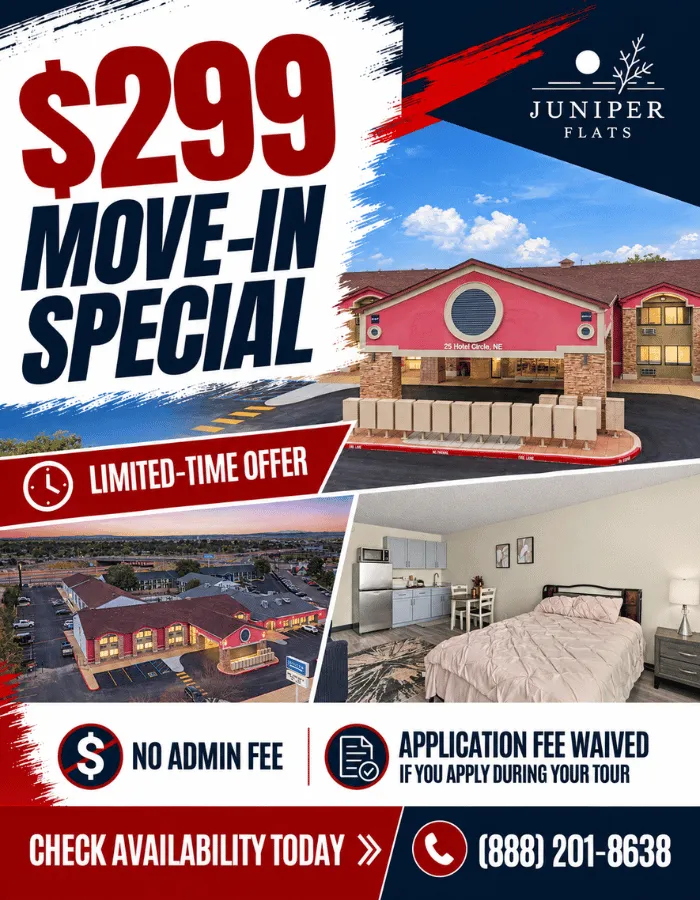
Albuquerque's Northeast Heights is the big residential slope east of the city center that climbs toward the Sandia Mountains. This guide covers what living in Albuquerque's Northeast Heights actually costs, which pockets suit renters, and how it compares with the suburbs. Juniper Flats Apartments serves renters in this part of Albuquerque from its studio community near I-40 and Eubank.
What Is Northeast Heights Albuquerque Like for Renters?
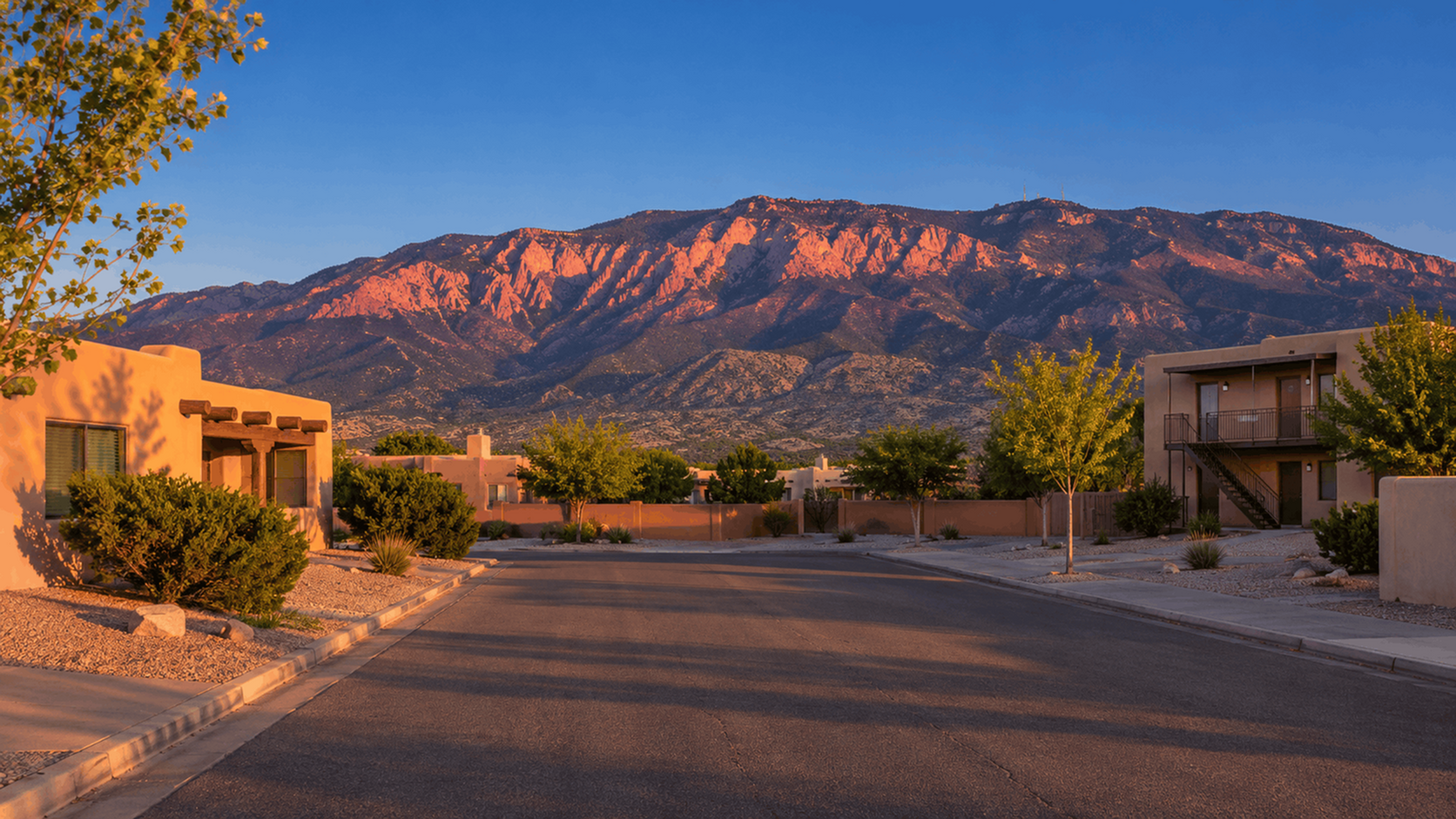
Northeast Heights Albuquerque is a broad, mostly residential quadrant running from the middle of the city east to Tramway Boulevard and the base of the Sandia foothills. Streets are wide and grid-like, apartments cluster along the arterials, and the mountains sit on your skyline every single day.
That view is the first thing people mention. The second is how ordinary daily errands feel: grocery stores, pharmacies and clinics are spread across every major intersection, so you rarely drive far for basics.
It's also big. Locals split it informally into the "near" Heights closer to Uptown and the "far" Northeast Heights up by the foothills, and the two feel different.
Areas of Albuquerque That Make Up the Heights
Real estate listings group dozens of subdivisions under the Northeast Heights name, including Snow Heights, Eldorado Heights, Chelwood Park, High Desert, Tanoan and Sandia Heights. Closer to I-40 and the Uptown shopping district, you'll find older apartment communities and duplexes at lower price points. Farther north and east, near Academy Road and Tramway, the housing shifts toward larger single-family homes and planned communities, with fewer apartments and higher rents.
For renters, the near Heights usually wins on price and convenience. The far Heights wins on trail access and quiet.
Commuters feel the split as well. The near Heights sits beside I-40 and the Uptown job cluster, so reaching downtown, the University of New Mexico or the Sunport is a straightforward drive. From the far Heights, those same trips take longer at rush hour, and bus coverage gets thinner as you approach Tramway. Map your daily route before you fall for a view.
How Much Does It Cost to Rent in the Northeast Heights?
Rent here generally tracks Albuquerque's citywide numbers, with studios and one-bedrooms near I-40 coming in lower than newer complexes by the foothills. The most reliable public benchmark is HUD's Fair Market Rent, which estimates the 40th-percentile gross rent (rent plus tenant-paid utilities) for a modest unit across the Albuquerque metro.
As of the FY2026 figures that took effect in 2026, the City of Albuquerque's 2026 HUD income and rent limit reference lists these metro Fair Market Rents. The Census Bureau's Albuquerque QuickFacts and Rio Rancho QuickFacts add the median gross rent residents actually reported.
| Measure | Monthly Amount | Source |
|---|---|---|
| Studio Fair Market Rent, Albuquerque metro | $1,009 | HUD FY2026 |
| One-bedroom Fair Market Rent | $1,185 | HUD FY2026 |
| Two-bedroom Fair Market Rent | $1,464 | HUD FY2026 |
| Albuquerque city median gross rent | $1,085 | Census ACS 2019 to 2023 |
| Rio Rancho median gross rent | $1,481 | Census ACS 2019 to 2023 |
One caveat. Census medians lag the market by a few years, and listing-site averages swing month to month depending on which buildings are advertising. Use these as a budget floor, then compare live listings.
Northeast Heights or the Albuquerque Suburbs
Rio Rancho is the largest of the Albuquerque suburbs, and the Census figures above show its median gross rent running roughly $400 a month higher than the city's. It also has far fewer rentals: most of its housing is owner-occupied. The Heights gives you a deeper apartment supply, shorter drives to Uptown, Kirtland AFB and the hospitals, and a free bus system. If you're weighing the tradeoffs, our guide to which apartment amenities matter most in the city vs. the suburbs breaks it down.
Is the Northeast Heights One of the Best Places to Live in Albuquerque?
For many renters, yes. It belongs among the best places to live in Albuquerque because it combines mountain access, everyday convenience and a wide range of rents. The tradeoff is that the far Heights is car-dependent, and some foothill subdivisions have almost no apartments at all.
Trail access is the standout. Elena Gallegos Open Space, a 640-acre park at 7100 Tramway Blvd NE, opens at 7 a.m. year-round and connects to the foothills trail network, according to the City of Albuquerque Open Space Division. From the near Heights, the drive up Tramway is short enough for an after-work hike.
Getting around without a car is easier than most newcomers expect. ABQ RIDE made zero fares permanent in November 2023, so city buses, Albuquerque Rapid Transit along Central Avenue and qualifying Sun Van trips cost nothing, per the city's zero fares page. That's a real monthly saving most rent comparisons ignore.
Gated Communities in Albuquerque and What Renters Can Expect
Most gated communities in Albuquerque sit in the far Northeast Heights. Tanoan is the best known: a guard-gated golf community north of Academy Road built around Tanoan Country Club. Parts of the High Desert master-planned community, such as its Enclave and Legends villages, are gated too. Rentals inside these neighborhoods are mostly single-family homes leased by individual owners, so expect rents well above the apartment averages in the table. If a gate matters to you mainly for security, ask apartment communities about controlled-access entry and package handling instead.
Frequently Asked Questions
1. Is Albuquerque a good place to live for renters?
For many renters it is. The city's Census median gross rent is $1,085 a month, buses are free, and open space reaches into city limits. Downsides include car-heavy outer neighborhoods and uneven rental quality, so tour in person and compare a few Albuquerque neighborhoods before signing.
2. What zip codes are in the Northeast Heights?
The Northeast Heights doesn't have official boundaries, but these zip codes are commonly associated with it:
- 87110 and 87112 for the central Heights near Uptown
- 87109 and 87111 for the northern and far northeast Heights
- 87122 for the foothills and Sandia Heights edge
- 87123 for the area along I-40 near Eubank and Juan Tabo
3. What are the suburbs of Albuquerque NM?
The main suburbs of Albuquerque NM are Rio Rancho to the northwest, Corrales and the Village of Los Ranchos to the north, and smaller East Mountain towns like Tijeras. Rio Rancho has the most rental options, though its Census median gross rent of $1,481 runs higher than Albuquerque's.
4. Is the bus free in the Northeast Heights?
Yes. ABQ RIDE fixed routes, Albuquerque Rapid Transit and Sun Van paratransit for qualified riders are all fare-free after the City Council made zero fares permanent in November 2023. Routes along Montgomery, Menaul, Lomas and Central serve much of the Heights.
5. What should renters check before signing a lease in the Heights?
Ask what utilities are included, since Fair Market Rent figures count them. Confirm parking, pet rules and the renewal terms up front. If you might stay a few extra months, read up on how a lease extension works before you commit to a fixed end date.
Conclusion
The Northeast Heights gives Albuquerque renters mountain trails, steady access to jobs and shopping, and free transit, without the higher rents Census data shows in Rio Rancho. Start with HUD's studio benchmark of about $1,009, decide whether you want the near or far Heights, and tour a few communities. Ask each one the same questions about utilities, parking and lease terms so the comparison stays fair. Living in Albuquerque's Northeast Heights works best when you match the pocket to your commute.